LEARN / PRACTICE / PLAY
Make every
note count.
Practical guitar learning for a stronger foundation, confident technique and a sound that feels like your own.
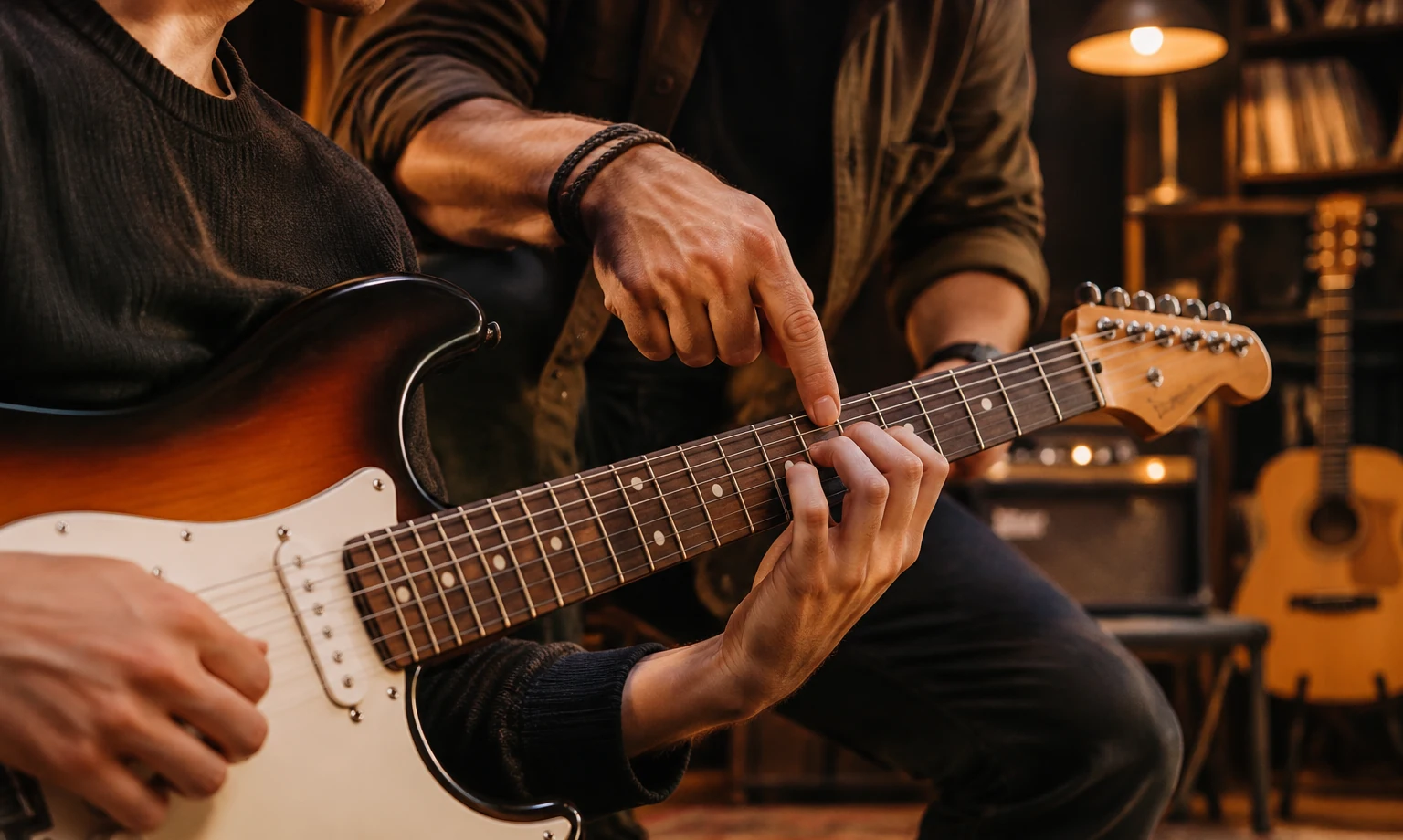
Good guitar playing is built one clear idea at a time. Our lesson library is designed to help players develop stronger fundamentals, better timing and a more personal approach to tone and expression.
Build a reliable foundation
Start with posture, tuning, fretting-hand comfort, picking control and clean chord changes. These fundamentals make more advanced techniques easier and more enjoyable.
Develop your musical vocabulary
Explore scales, chord tones, rhythm patterns, phrasing and fretboard navigation. The aim is not to memorize shapes in isolation, but to understand how musical ideas connect.
Make technique serve the music
Work on dynamics, articulation, bends, vibrato, muting and tone shaping. Small choices in touch can transform a simple phrase into something expressive.
Choose a learning path
Whether you are starting out or refining your playing, use the lessons and journal articles as a flexible practice companion. For personal lesson or collaboration inquiries, visit the Contact page.
A PRACTICAL WAY TO LEARN
Build the skills. Find your voice.
Good guitar playing is not about collecting exercises or playing as fast as possible. It comes from understanding the instrument, developing reliable habits and learning how to turn technique into music. These lessons are designed to make each practice session purposeful, musical and achievable.
Whether you are picking up the guitar for the first time or returning to the instrument with fresh goals, start with the fundamentals and build from there. Focus on steady progress, listen closely and give every new idea time to settle.
What you can work on
- Foundations: tuning, posture, fretting-hand comfort, picking control and clear chord changes.
- Rhythm: timing, subdivisions, strumming patterns, muting and playing comfortably with a beat.
- Fretboard knowledge: notes, intervals, scale shapes, chord tones and useful connections across the neck.
- Musical expression: dynamics, phrasing, bends, vibrato and developing your own feel.
CHOOSE YOUR FOCUS
Four paths to
a better feel.
Use these learning paths as a starting point. Move at your own pace and return to the fundamentals whenever you need them.
Core Technique
Posture, tuning, picking control, fretting-hand comfort and clean chord changes.
Fretboard Fluency
Intervals, scale connections, chord tones and practical music theory.
Rhythm & Expression
Timing, groove, muting, dynamics, phrasing, bends and vibrato.
Tone & Performance
Signal-chain basics, tone shaping, song preparation and stage confidence.
MAKE PRACTICE COUNT
A simple practice routine
A consistent, focused routine is more useful than an occasional marathon session. Try dividing your practice time into a few clear blocks:
- Warm up: play slowly and comfortably to prepare your hands.
- Work on one skill: choose a single technique or musical idea and repeat it with attention.
- Apply it to music: use the idea in a riff, song, progression or improvisation.
- Reflect: note what improved and what you want to revisit next time.
Keep the tempo manageable. Clean, relaxed playing is the goal; speed can come later as control becomes more dependable.
Who are the lessons for?
Beginners can use the learning paths to establish strong habits. Returning players can identify gaps, refresh their technique and reconnect with the instrument. More experienced guitarists can use focused study to refine timing, tone, phrasing and fretboard awareness.
Lesson topics can be shaped around your experience, musical interests and goals. If you are not sure where to begin, tell us what you play now and what you would like to be able to play next.
READY TO TAKE THE NEXT STEP?